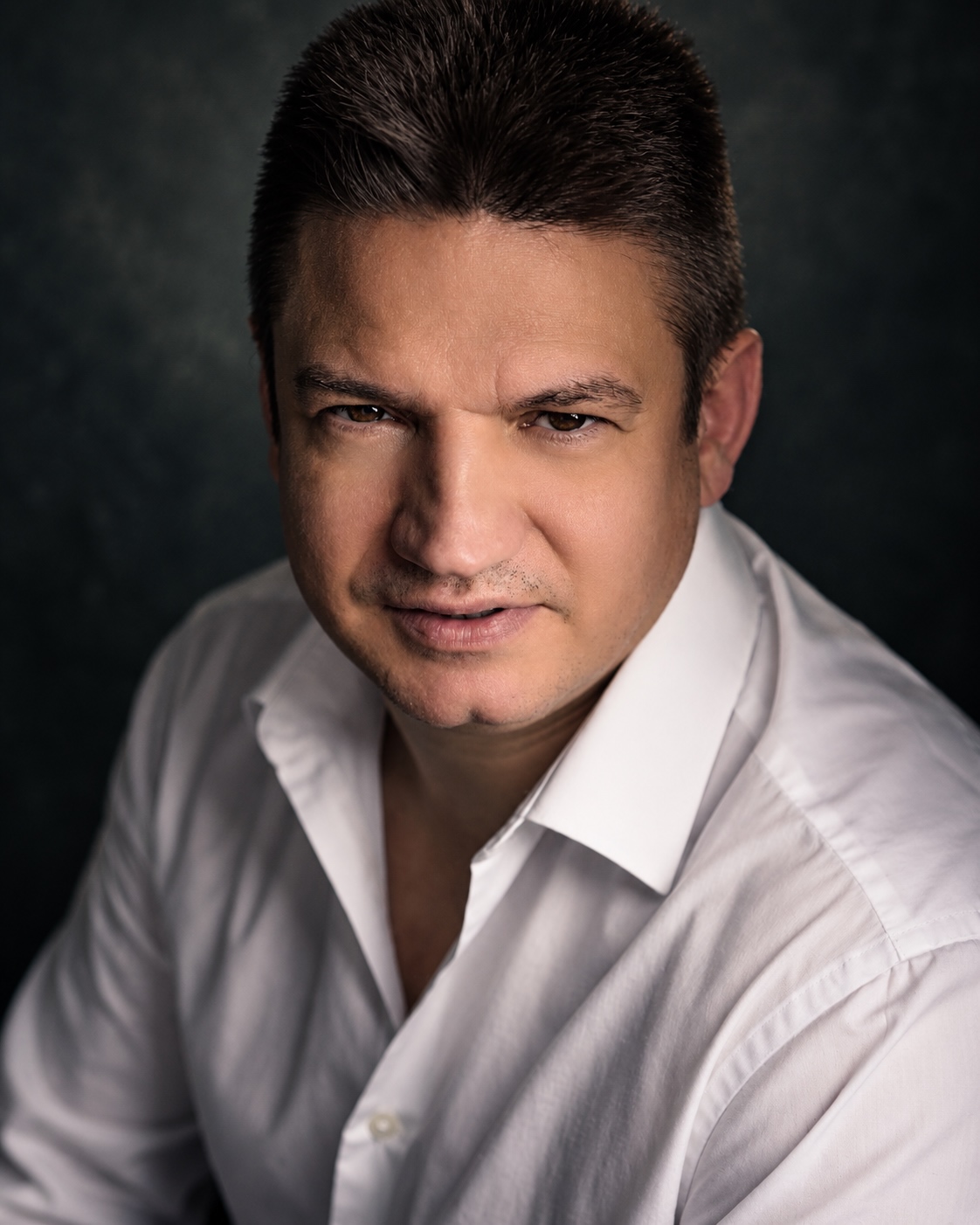
Peter Korday Featured in an In-Depth Interview by Cannes Film Awards

Korday Cannes Film Awards interview

Cannes Film Awards has published an in-depth interview with French-Hungarian film director, producer and screenwriter Peter Korday, co-founder and CEO of Paris-based Gold Wood Pictures.

The interview offers a closer look at Korday’s creative approach, his transition from theatre to cinema, and the artistic philosophy behind his feature film Soft Floating in the Fields of Spheres.

Living and working in Paris, Peter Korday has developed a cinematic language rooted in European auteur cinema while pursuing an increasingly personal visual and narrative identity. In the Cannes Film Awards interview, he reflects on the importance of preserving an authentic creative voice in contemporary filmmaking and on his preference for developing his own cinematic language rather than following current trends.

Soft Floating in the Fields of Spheres

In the conversation, Korday discusses his debut feature film Soft Floating in the Fields of Spheres.

The 61-minute psychological drama follows Rebecca, a ceramic artist, on an inner journey through four interconnected timelines, gradually revealing connections between reality, memory, fantasy and fear.

Rather than following a conventional linear structure, the film moves between different layers of perception and consciousness. Its visual language, music and intimate approach to performance are central to the storytelling.

Speaking about the production, Korday describes the deliberately small and closely connected crew with which the film was created. Some scenes were filmed with only the director, lead actress and cinematographer present, allowing the production to maintain a particularly intimate atmosphere around the performance.

The film stars Kristina Lorent in the role of Rebecca. Her performance required a highly internal approach, reflecting the film’s shifting emotional and perceptual realities.

Since its world premiere at the International Film Festival The Hague in November 2025, Soft Floating in the Fields of Spheres has continued its international festival journey and received recognition across several countries. The Hague festival presented the film as a world premiere and described it as a journey through past, present and imagined futures. (IFFH)

From Theatre to Film

The Cannes Film Awards interview also explores Peter Korday’s earlier career in theatre and the path that eventually led him toward filmmaking.

Korday explains that becoming a film director was not originally part of a predetermined career plan. His initial move into cinema grew from a desire to explore subtler forms of expression than those available within the theatrical space.

Film gradually became a way to expand his directorial vocabulary — particularly through close visual detail, silence, rhythm and the ability to communicate internal emotional states without necessarily expressing them through dialogue.

His years working as a theatre director in Los Angeles also form part of this artistic background. That experience continues to influence his approach to actors, atmosphere and performance, while his filmmaking increasingly moves toward a distinct visual language of its own.

An Independent Cinematic Voice

Discussing contemporary filmmaking, Korday highlights the opportunities that technological change has created for independent filmmakers, particularly the possibility of producing films outside traditional structures and reaching international audiences.

At the same time, he emphasizes the importance of maintaining artistic individuality in an increasingly fast-moving, content-driven environment.

This philosophy is also central to the work of Gold Wood Pictures, whose projects combine independent production with a strong emphasis on visual authorship, performance and internationally oriented cinema.

Looking ahead, Peter Korday confirms in the interview that further projects are already in development, including a psychological drama, a comedy and another short-form production.

The complete conversation offers a more personal insight into his approach to directing, filmmaking and the continuing development of his cinematic language.

Read the full Peter Korday interview on Cannes Film Awards:
https://cannesfilmawards.com/interviews/peter-korday

PETER KORDAY IN CONVERSATION WITH KLG ÉLORÉ

PETER KORDAY IN CONVERSATION WITH KLG ÉLORÉ

Film director, producer and Gold Wood Pictures CEO Peter Korday is featured in the first issue of KLG ÉLORÉ in an in-depth conversation exploring his directorial philosophy, visual storytelling and independent creative path. The interview offers a closer look at the ideas that shape his work and at the artistic principles behind a cinematic language built around image, rhythm, atmosphere and emotional precision.

Rather than approaching filmmaking only through dialogue or conventional narrative structure, Korday speaks about cinema as a visual and sensory experience. For him, an image can carry meaning before a character says a single word, while music, silence, movement and composition can shape the emotional architecture of a scene. This approach places visual storytelling at the centre of his work and reflects a broader interest in creating films that are experienced as much as they are understood.

A central theme of the conversation is creative independence. Korday discusses the importance of developing an individual artistic language instead of following established formulas or attempting to reproduce what has already succeeded elsewhere. His perspective on directing is closely connected to authorship: the filmmaker must build a coherent world, make clear aesthetic choices and trust the audience to enter that world without being over-directed.

This philosophy is captured in one of the key statements from the interview:

“My goal as a film director is not to serve the audience, but to lead them.”

The quote reflects his belief that cinema should not simply respond to expectation, but create a distinct point of view. For Korday, leading the audience does not mean controlling every interpretation. It means creating a strong enough cinematic language for the viewer to follow emotionally, while still leaving room for ambiguity, imagination and personal response.

The interview also explores the relationship between cinema and music, a connection that has long influenced Korday’s approach to directing. Rhythm, pacing and silence can function almost musically, shaping tension and emotional movement without relying on explanation. A pause, a change in tempo or a carefully placed musical element can alter the meaning of an image and create an experience that remains with the viewer beyond the immediate narrative.

Another important part of the conversation is the intersection of cinema, fashion and visual identity. Costume, texture, silhouette and styling are considered not as decorative additions, but as part of character and storytelling. In this sense, fashion and film share a common visual vocabulary: both can express identity, atmosphere, transformation and memory through image.

This makes KLG ÉLORÉ a natural setting for the conversation, bringing together cinema, fashion, photography and contemporary visual culture within one editorial space. The interview moves freely between these disciplines while remaining focused on the question of how a filmmaker develops and protects an individual artistic identity.

Korday also reflects on the value of restraint. Rather than explaining every detail, he is interested in allowing images to retain mystery and emotional openness. This creates space for the audience to participate in the film, to connect associations and to respond intuitively.

Such an approach is especially significant within independent and auteur cinema, where personal vision and formal freedom often play a central role. The conversation highlights the importance of trusting visual storytelling and allowing cinema to communicate through mood, composition and emotional rhythm rather than through explanation alone.

The interview also touches on the creative direction behind Gold Wood Pictures, the Paris-based production company connected to Korday’s filmmaking work. The company’s creative identity reflects many of the same principles discussed in the interview: visual authorship, artistic independence, cinematic identity and a commitment to developing projects with a strong and recognizable point of view.

Ultimately, Peter Korday’s conversation with KLG ÉLORÉ is not simply a profile of a filmmaker. It is a reflection on cinema as an art form and on the responsibility of a director to protect an individual creative voice.

The interview reveals how image, sound, fashion, rhythm and silence can become parts of the same artistic language, while offering insight into the ideas that continue to shape Peter Korday’s work as a film director and producer.

Read the full interview in KLG ÉLORÉ — Issue 01.

https://kristinagoztola.com/klg-elore